Best Fire Escape Ladders for Indian Homes and Apartments (2026)
A practical, floor-by-floor guide to choosing a fire escape ladder for an Indian home, with the right length, load rating, and storage for each situation.
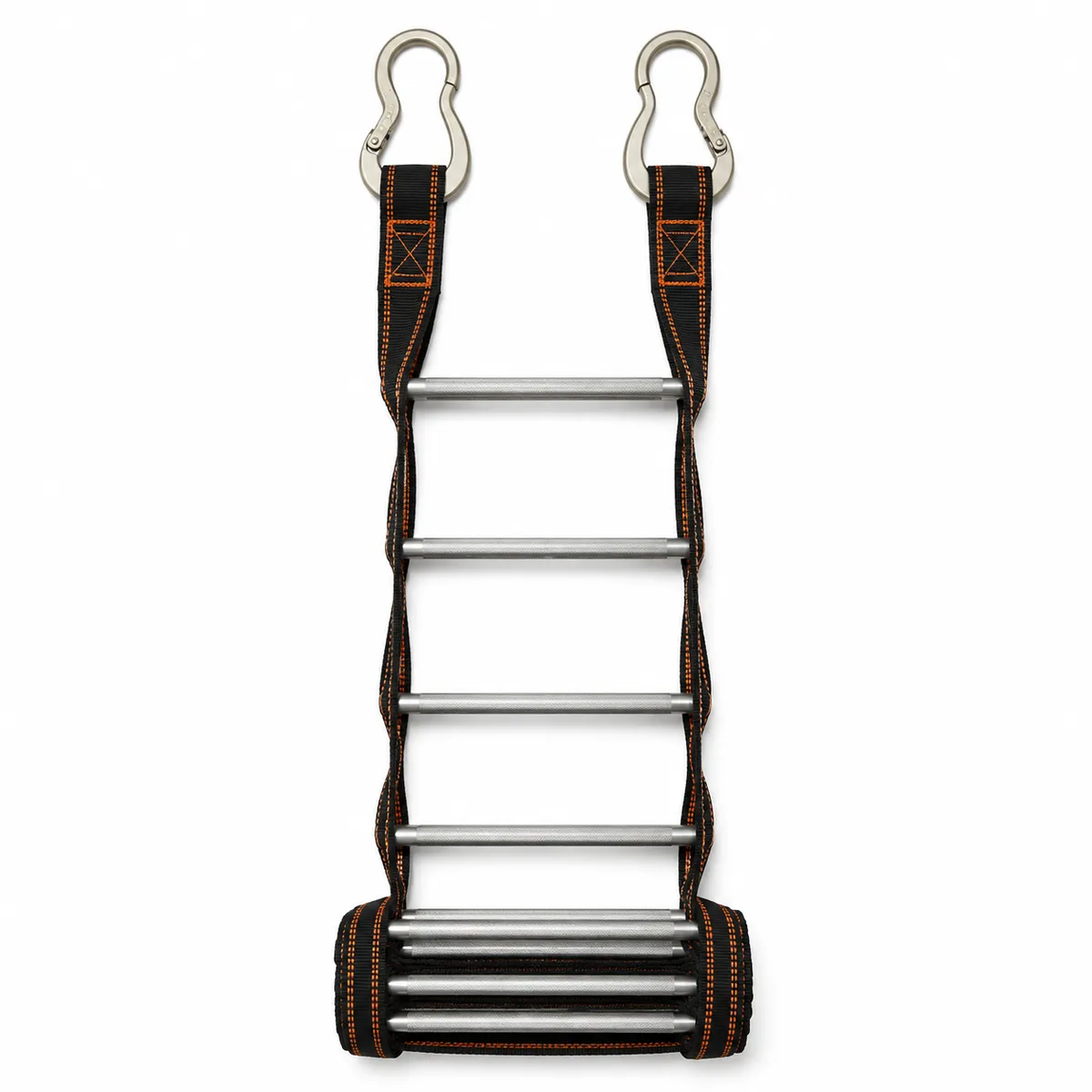
If you live above the ground floor, the single most useful fire-safety buy is a portable rope escape ladder you can hook over a window or balcony in seconds. For most 2nd and 3rd floor Indian homes, the best choice is a foldable 10-metre (32.8 ft) polyester webbing ladder rated to about 900 kg, because it reaches the ground from a typical third-floor window, stores flat under a bed, and needs no installation. Below is how to pick the right one for your floor, followed by what actually matters when you compare them.
is often all you have to get out once a home fire starts spreading, which is why a pre-placed escape route beats any plan you have to improvise. (General fire-safety guidance, NFPA / NDMA.)
# The shortlist, by where you live
# 1. Best overall (2nd and 3rd floor homes): 10 m / 32.8 ft rope ladder
For the largest share of Indian households, a 10-metre rope ladder is the sweet spot. Ten metres clears the drop from a typical third-floor window with a little slack to spare, and the same ladder works from a second-floor window or balcony. Look for woven polyester webbing rather than thin cord, anti-slip rungs spaced for a natural step, and two steel hooks that drop over a sill, grille, or railing without tools. A load rating near 900 kg (2000 lb) means it holds an adult with a wide margin and can take an adult carrying a child. Because the webbing has no rigid frame, it folds flat and stores in the cupboard nearest the window, which is exactly where you want it in an emergency.
# 2. Best for a single upper floor (2nd floor window)
If your only risk window is on the second floor, you do not need ten metres. A 4-5 metre ladder reaches the ground from most second-floor sills and is lighter and even quicker to deploy. The trade-off is that it will not cover a higher window later, so buy for the highest window you would actually use to escape, not the lowest. Confirm the hook opening fits the thickness of your sill or grille before you rely on it.
# 3. Best for high floors (4th floor and above)
Above the third floor, rope ladders get long, heavy, and slow to climb, and they swing more against the wall. A 15-metre (49 ft) ladder is the practical ceiling for a portable rope design; beyond that, escape planning should lean on the building's protected staircase and fire systems rather than a personal ladder. If you do buy a long ladder, practise the descent once so the height does not surprise you in a real event.
# 4. Best compact pick for renters and small flats
If storage or a deposit-friendly, no-drilling solution is the priority, a foldable webbing ladder with over-the-sill hooks is ideal. There is nothing to fix to the wall, nothing to lose your deposit over, and the whole thing tucks into a drawer. This is the same category as our top pick, just chosen for packability first.
# What actually matters when you compare
- Length vs. your floor. Measure from the window sill straight down to the ground and add a little slack. Buy for the highest window you would escape from.
- Load rating. Aim for a manufacturer rating around 900 kg (2000 lb). You descend one person at a time, so this is a comfortable safety margin, not a limit you are pushing.
- Hook compatibility. The steel hooks must actually fit over your sill, grille, or railing. Check the opening width against the surface you would hang it on.
- Rungs and grip. Wide, anti-slip rungs are far easier to use under stress and with bare feet than thin round cord.
- Storage location. A ladder in a far-off store room is useless. The best ladder is the one in the room where your family sleeps.
# Frequently asked questions
What length fire escape ladder do I need for a 3rd floor flat?
About 10 metres (32.8 ft) reaches the ground from a typical third-floor Indian window. Measure from your sill to the ground and choose a length with a little slack rather than one that ends short.
Are rope escape ladders safe for children and elderly people?
Yes, with supervision. Send the most vulnerable person first with a calm adult guiding from the window, keep one person on the ladder at a time, and practise one slow descent in advance so the motion is familiar.
Do I need to drill or install anything?
No. A good portable ladder uses two steel hooks that drop over the window sill, grille, or balcony railing in seconds. Just confirm the surface is solid and can bear the load.
How often should I check it?
Inspect the webbing, rungs, and hooks twice a year, and run a short family escape drill at the same time so everyone knows which window and which ladder.
# Related reading and sources
For home fire planning principles, India's National Disaster Management Authority (https://ndma.gov.in) and the National Building Code of India (Part 4, Fire and Life Safety) are the authoritative references on escape routes and drills. Pair any escape ladder with working smoke alarms and a two-way, pre-agreed family escape plan, and revisit our pick above once you know which window is your primary exit.
Related posts
How to Escape an Upper-Floor Fire With a Rope Ladder
A calm, step-by-step guide to deploying and climbing down a portable fire escape rope ladder safely, plus the mistakes that make an upper-floor escape go wrong.
How to choose the right sunglasses for your face shape
A short, honest guide to picking sunglasses that actually suit you: frame shapes, lens coatings, and fit, with no jargon.